2026 MRMORINGA.CLUB IS NOW A MEMBER OF KENDRICK HENRY'S GROW MORINGA COLLECTIVE
About Us
Discover the Heart of Our Practice
We are more than just a yoga studio—we are a community dedicated to holistic well-being. Our experienced instructors create a supportive space where individuals of all levels can explore the transformative power of yoga. From mindfulness to movement, we believe in nurturing the body, calming the mind, and uplifting the spirit. Join us on this journey to find balance, strength, and peace within.

Balance.
Harmony. Strength. Transformation.
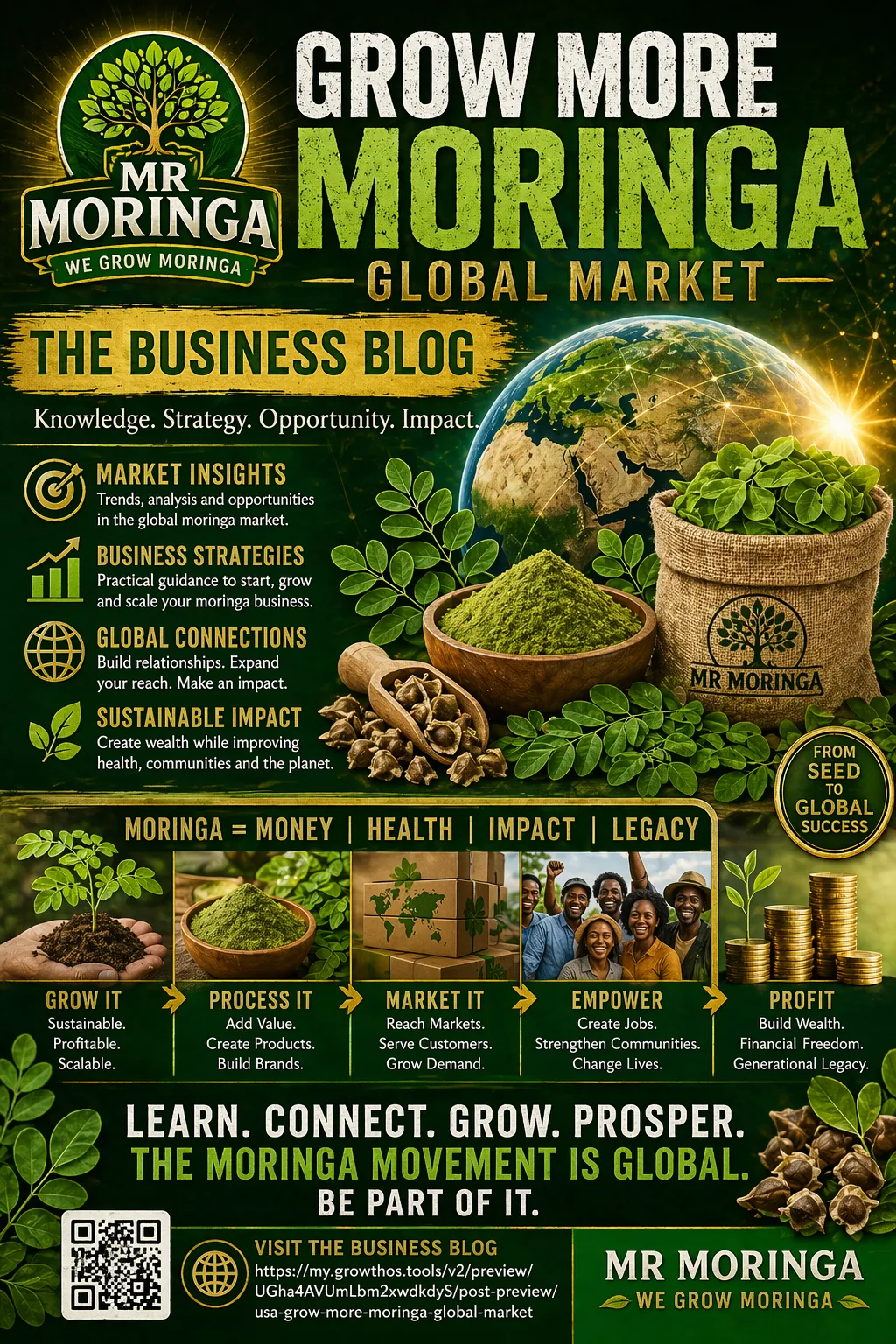
Should the USA Grow More Moringa?
Agriculture, Sustainability, Moringa
Should The USA Grow More Moringa?
Often called the “miracle tree,” moringa is gaining attention in health stores and research labs alike. But should it also be taking root across American farms and backyards?
What Makes Moringa So Special?
Moringa oleifera, native to parts of South Asia and widely grown in Africa and Latin America, is prized for its nutrient-dense leaves , edible pods , and oil-rich seeds . The leaves contain notable levels of vitamins A, C, and E, calcium, potassium, and plant-based protein. In many countries, it is used to combat malnutrition, support smallholder livelihoods, and provide a reliable green food source during dry seasons.
Nutrient density: High in vitamins A, C, and E, calcium, potassium, and plant-based protein.
Multiple edible parts: Leaves, pods, and seeds all have food or oil value.
Global role: Used to combat malnutrition and support smallholder livelihoods in many regions.
Beyond nutrition, moringa offers multiple uses from a single crop . Leaves can be eaten fresh, powdered, or made into tea; pods can be cooked like green beans; seeds yield a light, stable oil; and even the remaining seed cake can help clarify water. This versatility is a major reason it is gaining global attention as a “multipurpose tree.”
Leaves: Eaten fresh, dried and powdered, or brewed as tea.
Pods: Cooked like green beans for a tender vegetable.
Seeds: Pressed for a light, stable oil suitable for food and cosmetics.
Seed cake: Used to help clarify water after oil extraction.
📌 Key Takeaway: Moringa compresses leafy greens, plant protein, and high-value oil into one resilient tree—an attractive proposition for entrepreneurs designing diversified farm businesses.
Could Moringa Thrive in the United States?
Moringa prefers warm, frost-free climates , which immediately points to the southern United States as the most promising region. Parts of Florida, Texas, Arizona, California, and Hawaii already support small-scale moringa operations. In these areas, the tree can grow rapidly, producing multiple leaf harvests each year when managed correctly.
Best-fit regions: Frost-free parts of Florida, Texas, Arizona, California, and Hawaii.
Growth pattern: Rapid growth with potential for multiple leaf harvests per year.
Current status: Small-scale operations already exist in several southern states.
In cooler zones, moringa can still be grown, but usually as an annual or in protected environments such as greenhouses and high tunnels. While this raises production costs, it also opens opportunities for local, premium niche markets —for example, fresh organic moringa greens for health-conscious consumers, juice bars, or specialty restaurants in urban centers.
Cooler zones strategy: Grow as an annual or in greenhouses/high tunnels.
Cost trade-off: Higher production costs but access to premium local markets.
Potential buyers: Health-conscious consumers, juice bars, and specialty restaurants.
“Where climate is suitable, moringa can shift from curiosity to cornerstone—anchoring new revenue streams for small, agile farm businesses.”
Environmental Benefits: A Drought-Tolerant Ally
As water scarcity and heat stress become more common, American agriculture is searching for resilient crops . Moringa is naturally drought-tolerant once established, with deep roots that help it access moisture and stabilize soil. Compared with many leafy vegetables, it can produce green biomass under conditions that would severely limit other crops, making it a potential ally in climate adaptation strategies for farms, homesteads, and community gardens.
Drought tolerance: Deep roots allow access to moisture and help stabilize soil.
Biomass under stress: Produces green biomass when other leafy crops struggle.
Use cases: Climate adaptation for farms, homesteads, and community gardens.
Additionally, moringa’s fast growth and leafy canopy can contribute to soil protection and biodiversity . When integrated into mixed planting systems—such as alley cropping or agroforestry—it can provide partial shade, organic matter from pruned branches, and habitat for beneficial insects, all while offering a harvestable food product.
Soil protection: Canopy helps reduce erosion and protect soil surface.
Organic matter: Pruned branches add biomass and improve soil structure.
Biodiversity: Provides habitat for beneficial insects in agroforestry or alley-cropping systems.
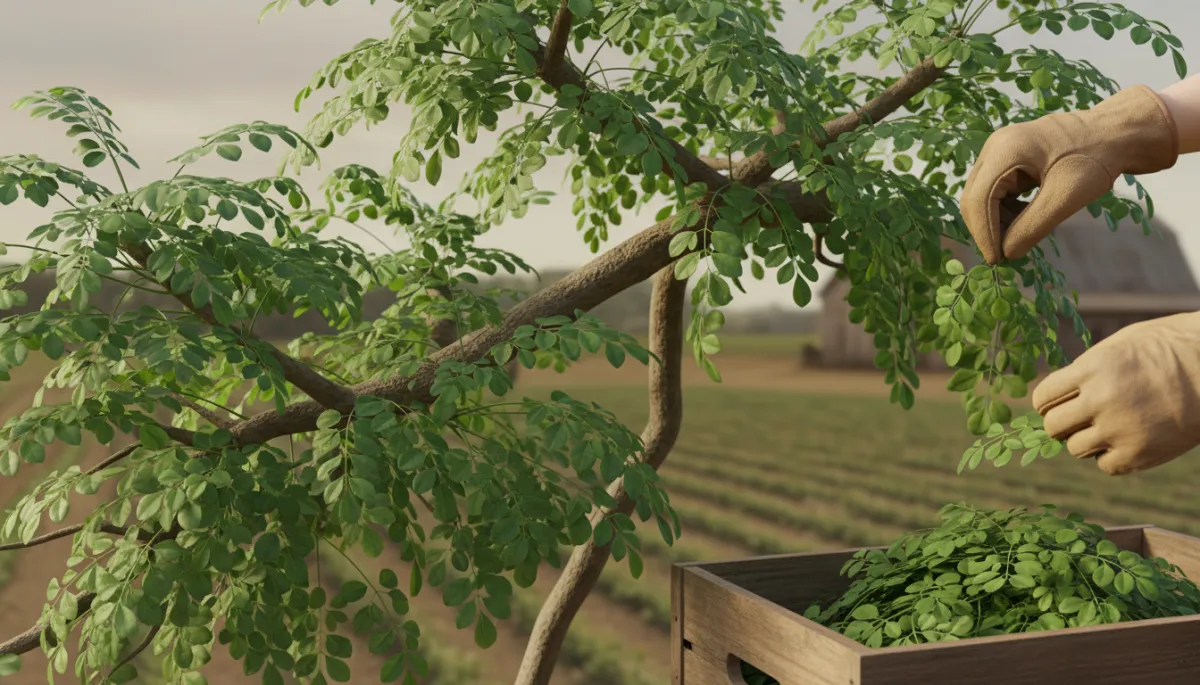
Regular leaf pruning supports continuous harvests while building soil health over time.
💡 Pro Tip: Position moringa as both a production asset and a marketing story—climate-smart, nutrient-dense, and visibly regenerative.
Market Demand: Is There Room for More Moringa?
In the United States, moringa is still a niche product , but its presence is growing quickly. Powdered leaf supplements, teas, energy bars, and fortified snacks are appearing on shelves in health food stores and mainstream supermarkets. As consumers look for plant-based protein and functional foods, moringa fits several emerging trends at once—sustainability, nutrition, and minimal processing.
Current status: Still niche but expanding across supplements and snacks.
Product formats: Powders, teas, energy bars, and fortified snacks.
Consumer trends: Plant-based protein, functional foods, sustainability, and minimal processing.
Currently, much of the moringa sold in the U.S. is imported . Expanding domestic production could shorten supply chains, improve traceability, and create new opportunities for American farmers—especially small and mid-sized operations seeking value-added crops. However, building a robust market will require continued consumer education, quality standards, and reliable processing and distribution networks.
Imports vs. domestic: Most moringa is imported; local production could add traceability and resilience.
Farmer opportunity: Value-added crop for small and mid-sized operations.
Market-building needs: Consumer education, clear quality standards, and strong processing/distribution.
Direct-to-consumer moringa powders, teas, and fresh greens
B2B supply for juice bars, wellness brands, and functional food startups
Regenerative agriculture stories that command premium pricing
Challenges and Considerations for U.S. Growers
Despite its promise, moringa is not a one-size-fits-all solution. Farmers must consider frost sensitivity , labor needs for frequent leaf harvesting, and the cost of drying or processing if they aim to supply shelf-stable products. Research on optimal varieties and management practices for different American regions is still developing, which means early adopters may face a learning curve.
Climate risk: Highly sensitive to frost in non-tropical regions.
Labor demands: Frequent leaf harvesting requires consistent labor.
Processing costs: Drying and processing add expense but enable shelf-stable products.
Knowledge gap: Region-specific variety and management research is still emerging.
There are also regulatory and quality aspects to keep in mind. As with any food or supplement crop, producers must comply with food safety rules, labeling requirements, and potential organic certification standards. Maintaining consistent nutrient profiles and low contamination levels will be essential if moringa is to gain long-term trust among U.S. consumers and healthcare professionals.
Food safety: Adherence to handling, hygiene, and storage regulations is mandatory.
Labeling: Clear, compliant labels for supplements and food products.
Certification: Potential organic or other certifications to meet market expectations.
Quality consistency: Stable nutrient profiles and low contamination to build trust.
⚠️ Warning: Skipping post-harvest protocols or documentation may erode brand trust—treat compliance and quality control as core parts of your moringa business model.
So, Should the USA Grow More Moringa?
Taken together, the evidence suggests a clear answer— yes—with intention and strategy . The USA should grow more moringa, particularly in regions suited to its climate, and in ways that complement existing cropping systems rather than replace them outright. Its nutritional value, drought tolerance, and versatility align well with the country’s shifting priorities around health, resilience, and sustainable agriculture.
Overall verdict: Yes—expand moringa with careful planning and regional fit.
Integration approach: Complement existing cropping systems rather than fully replacing them.
Strategic fit: Aligns with goals around nutrition, drought resilience, and sustainability.
For farmers, moringa offers a promising specialty crop; for communities, it provides a fresh, nutrient-rich food source; and for the broader food system, it represents a step toward diversification in the face of climate uncertainty. Growing more moringa in the United States will not solve every agricultural challenge, but as part of a diversified strategy, it may prove to be one of the most valuable new trees to take root in American soil.
For farmers: A high-potential specialty crop with value-added product options.
For communities: Access to fresh, nutrient-dense greens and products.
For the food system: Greater diversification and resilience amid climate uncertainty.
💡 Pro Tip: If you are serious about building a moringa-focused enterprise—from propagation to product and brand—consider joining a community that is already doing it at scale.
The Grow Moringa Collective is designed for entrepreneurs who want to accelerate the business side of moringa—sharing proven production systems, marketing strategies, and membership-based support so you do not have to build your operation alone.
📣 Join the conversation: Have you grown, used, or marketed moringa in your own context? Share your experiences, questions, or tips in the comments below so other growers and curious readers can learn from you.
With Kendrick Henry, We are Turning Moringa into INCOME!!!
Even If you don't have land or trees, that's okay. Start with the right information. Kendrick Has over 10 years of moringa farming experience, to help you. The next step, is to learn how to turn moringa into a valuable product that you can sell.

Our Health Is Our Wealth
Quick Links
More Info
Free Resources
Ready To Grow Give Us a Call or Text.


